Reported Edmunds app user growth in the first few months after Can It Fit? launched.
← All stories
Case Studies / 02 · Edmunds
Making AR Useful.
Turning customer uncertainty into useful products.
Edmunds already had a mature Agile and rapid-prototyping culture. I applied that discipline to immersive media, creating tangible prototypes that helped customers, product teams, and the C-suite evaluate what deserved further investment. Can It Fit? and Interactive 360 became the strongest product expressions of that work.

Executive impact at a glance
Why this work mattered.
Can It Fit? reported 700% app user growth in its first few months and earned press recognition for practical AR. Two Interactive 360 projects generated approximately $2M in direct revenue through a separate OEM business model.
Role
Director of Immersive Technology
Two Interactive 360 projects, approximately $1M each.
Launch partner, followed by Google interest in bringing the concept to ARCore.
Computerworld recommended ARKit apps; Next Reality launch coverage.
My contribution
I led immersive product exploration from customer research and spatial prototypes through cross-functional delivery, aligning product, editorial, video, and engineering around Can It Fit? and Interactive 360.
Finding the real problem
Customers did not want emerging technology.
They wanted confidence.
Car shopping contains practical questions that specifications alone cannot answer. Will the vehicle fit the garage? Is the cabin comfortable? What do the controls and features actually feel like in use?
Research and observation revealed a shared opportunity: reduce uncertainty before purchase. Two distinct products emerged from that strategy, each addressing a different customer question.
One strategy · Two product questions
Understanding and validation worked together to create confidence.
Interactive 360 helped shoppers understand a vehicle they could not physically inspect. Can It Fit? helped them validate whether that vehicle would work in their real life. Different products, same product strategy: remove uncertainty at the point of decision.
Shared opportunity
Remove uncertainty
Help shoppers decide before purchase.
Can It Fit?
Will this vehicle work in my space?
Interactive 360
Let me inspect the features at my own pace.
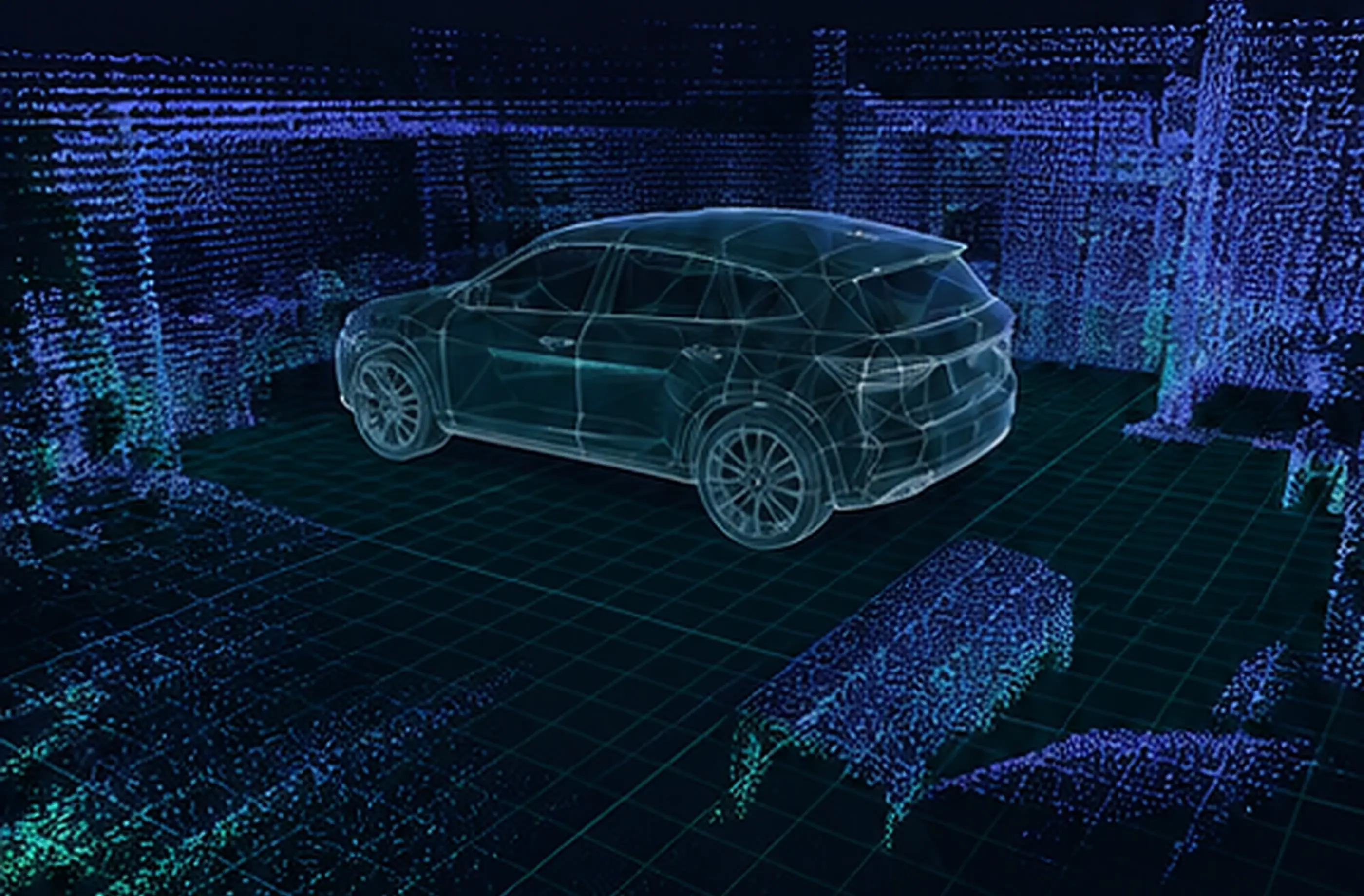
Product 01 · Can It Fit?
Prototype the uncertainty before building the product.
Tango and HoloLens tests made the idea tangible, exposed technical limits, and gave the organization evidence before full engineering investment.
Listen
Start with customer uncertainty.
Prototype
Test the idea at real scale.
Validate
Learn before committing engineering.
Launch
Integrate it into the shopping journey.
Prototype to production
Each platform answered a different product question.
Google Tango and HoloLens were rapid Unity prototypes used to test spatial behavior and product value. The production experience moved to Apple’s ecosystem with a native SceneKit implementation. The technology changed as the product matured; the customer problem stayed constant.
Google Tango
Unity prototypeTest spatial behavior and product value.
HoloLens
Unity prototypeExplore the idea through another platform.
Apple
Native SceneKitBring the production experience into Apple’s ecosystem.
Can It Fit? · Measurable impact
A useful decision tool became a growth engine.
Can It Fit? addressed a practical shopping question and reported 700% user growth in its first few months. Launch coverage recognized its useful application of ARKit.
Reported app user growth
Reported 700% growth in the first few months. The remembered metric does not distinguish new from active users.
External platform validation
Edmunds launched as an Apple partner. Google later invited the team to bring the successful product concept to ARCore.
Press recognition: Computerworld’s recommended ARKit apps ↗ · Next Reality launch coverage ↗
Product 02 · Interactive 360 Pano
The first solution was immersive. It was not useful enough.
Two customer questions shaped the products: will the vehicle fit my space, and can I inspect it at my own pace?
I led the video and editorial teams through a series of 360-degree vehicle captures and published them on YouTube. The work was technically compelling, but users did not respond. Passive video forced people to follow our timing when they wanted to explore a vehicle at their own pace.
360 video
Immersive captures looked impressive, but the audience could not control the experience.
Customer insight
People wanted time, control, detail, and useful guidance while exploring a vehicle.
High-resolution stills
A browser-based 360 product let users move, pause, zoom, and investigate freely.
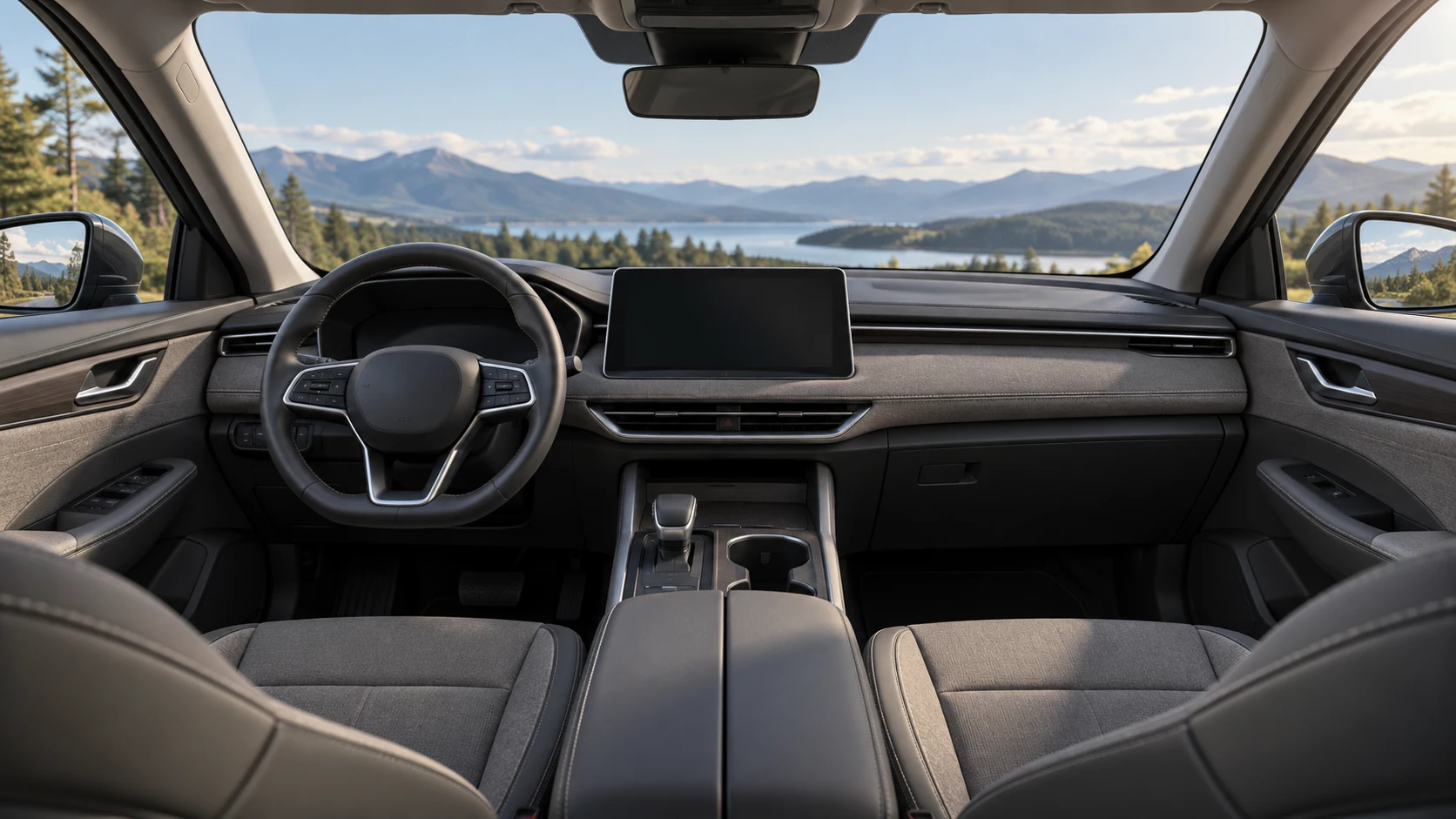
Hotspots connect visible features to editorial guidance, helping shoppers investigate at their own pace.
Conceptual reconstruction with a generated, fictional vehicle interior; not a historical product screenshot or a working panorama.
Product 02 · Interactive 360 Pano
Give shoppers control, then add trusted context.
High-resolution 360 stills let customers explore at their own pace. Purposeful hotspots connected each feature to Edmunds editorial insight.
Explore freely
Move, pause, zoom, and inspect.
Navigate with purpose
Use hotspots to surface useful details.
Add trusted context
Pair features with editorial guidance.
Remove friction
Run in standard browsers without a plugin.
Validate before building
Reduce risk before engineering.
I researched the immersive market, met technology companies at SXSW, and selected a browser-based partner. A high-fidelity Photoshop prototype then made the product tangible enough to validate with automotive OEMs before committing to production development.
Prototype before production
Interactive 360 Pano · Measurable impact
A validated product opened a direct OEM revenue stream.
Interactive 360 Pano turned a customer insight into a browser-based product that manufacturers could purchase, while establishing a commercial model distinct from Can It Fit?
OEM product revenue
Manufacturers purchased the experience directly, creating a new B2B revenue stream rather than relying on audience growth or advertising.
Low-friction product delivery
High-resolution interactive panoramas worked in standard browsers without requiring customers to install a plugin or specialized application.
Validated before production
A high-fidelity Photoshop prototype made the concept tangible enough to secure OEM interest before committing to full production development.
Turning ideas into products
One product discipline. Two business models. Measurable value.
Across both initiatives, I started with customer uncertainty, prototyped before committing engineering, and aligned seven disciplines around commercial delivery. The technology changed; the product method did not.
Made a practical customer question easier to answer, with reported 700% user growth and a larger advertising opportunity.
Turned immersive vehicle imagery into a commercial offering manufacturers could purchase directly, generating approximately $2M.
Customer research
→
Product strategy
→
Rapid prototype
→
Cross-functional execution
→
Commercial launch
The pattern continues
The same discipline suggested what could come next.
Each recurring customer question suggested another way emerging technology could reduce uncertainty. I developed foundational concepts and basic roadmaps for six additional product directions.
These were product concepts and prototype directions—not launched products or a fixed implementation plan.
01
Virtual Reality Showroom
Sit inside and explore almost any vehicle before visiting a dealership.
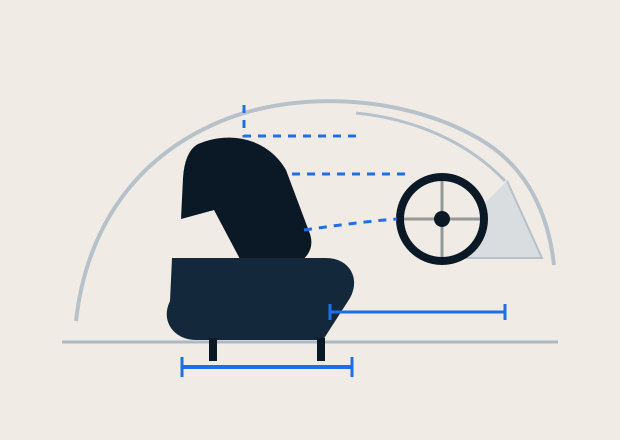
02
Personalized Seating Advisor
Compare OEM seating options and identify the position and vehicle that fit the shopper.
03
Cargo Space Visualizer
Use AR to evaluate real-world cargo such as luggage, strollers, and equipment.

04
Can It Fit? 2.0
Add measured door swings, trunk clearance, and real garage interactions.

05
Real-Time Vehicle Configurator
Render option changes from any angle using NVIDIA GPUs in the cloud—not pre-renders.
06
Connected Dealership Experience
Link physical inventory to Edmunds reviews and pricing through QR codes and early AR-glasses prototypes.
What I carried forward
Emerging technology creates value only when it reduces friction for people.
The decisive move was choosing a different experience when the first one did not serve the shopper: active exploration instead of passive viewing, and spatial validation instead of another specification.